
Project title: Networking for air quality – Romania / Wallonie-Bruxelles International
Acronim: NAIRROWBI
The project is financed by UEFISCDI through PN IV Program 5.8. – European and international cooperation Subprogram 5.8.3. – Bilateral/Multilateral. Project type: Mobility projects
Topic: 3. Food, bioeconomy, natural resources, biodiversity, agriculture and environment
Consortium members:
1. Institutul Național de Cercetare Dezvoltare pentru Optoelectronică, INOE 2000, Filiala Institutul de Cercetări pentru Instrumentație Analitică, ICIA, Cluj-Napoca
2. Institut Scientifique de Service Public, ISSeP, Liege, Belgia
Participating institutions:
1. National Institute of Research and Development for Optoelectronics INOE 2000 Research Institute for Analytical Instrumentation Subsidiary, Cluj-Napoca, Romania
2. Institut Scientifique de Service Public, Liege, Belgia
Contract nr: 4BMBE⁄2024
Abstract
Air quality is a global concern, as air pollution have negative effects on the health of population, especially in urban and intensively industrialized areas. Air quality monitoring with sensors offers the advantage of low cost in both installation and operation as well as high temporal-spatial resolution. The main objective of the project is the development of scientific collaboration between partners in the field of air quality assessment using low-cost sensors developed by the Belgian partner, standardized methods for the determination of air pollutants and biomonitoring using plants and mosses. The project will enhance the expertise of the team members in the use of sensors and biomonitors for air quality assessment as well as in the processing of large volumes of data and will be the basis for the development of new collaborations between partners.
Project objective
The “Networking for air quality – Romania/ Wallonie-Brussels International (NAIRROWBI)” project aims to develop scientific collaboration between ISSeP and INOE in the field of air quality by measuring the concentration of pollutants in the air using low-cost sensors developed by the Walloon partner, standardized methods and biomonitoring with plants and mosses.
Rezultatele estimate
Air quality monitoring plan.
Project web page.
Report on the air quality monitoring results in urban and industrial areas.
Manuscript submitted for publication.
Project team:
- CS I Dr. Levei Erika – project manager
- CS I Dr. Cadar Oana – team member
- CS I Dr. Senila Marin – team member
- CS II Dr. Torok Iulia – team member
- CS III Dr. Todor-Boer Otto – team member
- CS III Dr. Levei Levente – team member
- CS Dr. Kovacs Eniko – team member
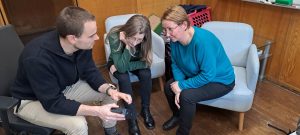
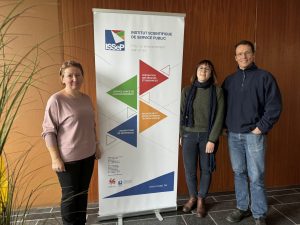
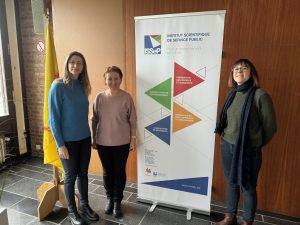
Stage 1 (2024): Study design and initiation of air quality monitoring
- A1.1. Visit of the Romanian team to the Walloon partner. Design and initiation of air quality monitoring
RESULTS
- Air quality monitoring plan
- Project webpage
Work visits during the bilateral project
- Visit of the Romanian team to the Walloon partner (Scientific Institute of Public Service, Liege, Belgium), Dr. Erika-Andrea Levei şi Dr. Eniko Kovacs – 1–6.12.2024
In Stage 1, the air quality monitoring plan for low-cost sensors, reference instruments, and biomonitors was established. Four monitoring points were selected in the city of Cluj-Napoca, located in areas with different traffic intensities, and one monitoring point was established in the industrial area of Baia Mare. The local calibration phase of the sensors was initiated.
Stage 2 (2025): Monitoring air quality in urban and industrial areas using low-cost sensors, standardized methods and plants.
- A2.1. Visit of the Walloon team to the Romanian partner. Monitoring air quality in urban and industrial areas using low-cost sensors, standardized methods and plants.
- A2.2. Visit of the Romanian team to the Walloon partner. Data analysis and interpretation.
RESULTS
- Report on monitoring air quality in urban and industrial areas.
- 2 conference presentations:
- Levei E.A., Kovacs E., Torok A.I., Todor-Boer O., Moldovan A., Angyus B.S., Levei L., Lenartz F., Dury M., Moss bags as a biomonitoring tool for potentially toxic elements in urban agglomerations, 16th Conference on Analytics and Technology in Environmental Protection, 5-7 November 2025, Balatonszarszo, Hungary (poster)
- Levei L., Todor-Boer O., Kovacs E., Roman M., Dordai L., Torok I., Claudiu Tanaselia C., Moss bags as bioindicators of urban air pollution, Agriculture and Food: Current and Future Challenges, on-line, 24.10.2025 (poster)
- Updated project webpage
Work visits during the bilateral project:
- Visit of the Romanian team to the Walloon partner (Scientific Institute of Public Service, Liege, Belgium), Dr. Erika-Andrea Levei and Dr. Anamaria Iulia Torok – 16–20.09.2025
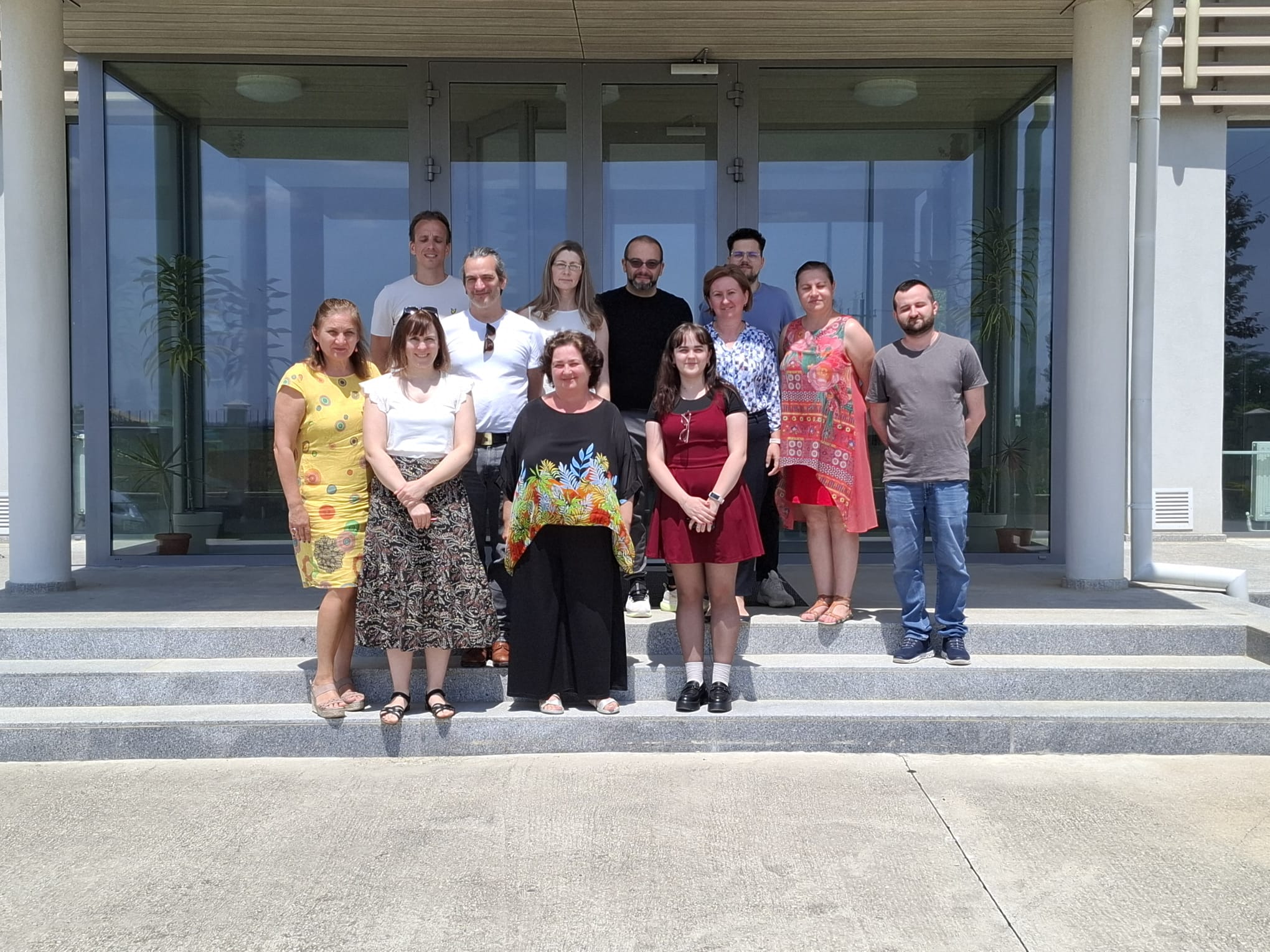
- Visit of the Walloon team to the Romanian partner (INCDO-INOE 2000, Research Institute for Analytical Instrumentation ICIA subsidiary, Cluj-Napoca, Romania), Dr. Marie Dury, Dr. Fabian Lenartz – 15-19.06.2025
In Stage 2, the performance of the low-cost sensors was investigated in comparison with reference instruments, and the concentrations of PM10, PM2.5, O3, and NO2 were monitored in five locations with different traffic intensities in the city of Cluj-Napoca and the industrial area of Baia Mare. The concentrations of total suspended particles and PM10 were determined using gravimetric methods. The metal content of total suspended particles and PM10, as well as the accumulation of metals in thuja leaves (Thuja orientalis, var. Smaragd) and moss bags (Pleurozium schreberi) exposed at the monitoring points in Cluj-Napoca was also measured. The results showed a significant improvement in the accuracy of measurements performed with the low-cost sensors for PM2.5, PM10, and O3 after the on-site calibration in Cluj-Napoca. For NO2, the performance of the local calibration was lower than that of the initial calibration performed in Liège. The bioaccumulation of metals in thuja leaves was higher for Cu, Zn, and Ni in high-traffic areas, while Pb and Cr showed comparable levels across all the studied areas. The analysis of moss bags confirmed increased accumulations of Cu and Zn in high-traffic areas. The results demonstrated that locally calibrated low-cost sensors can be a viable solution for monitoring PM2.5, PM10, and O3, enabling an increase in the spatio-temporal resolution of air quality monitoring networks. The used plant biomonitors proved to be reliable and complementary tools for long-term assessment of airborne metal pollution.

Contact
Project manager
CS I Dr. Erika Levei
Str. Donath nr. 67, Cluj-Napoca, Romania
E-mail: erika.levei@icia.ro; icia@icia.ro
Tel/Fax: +40 264 420590 / +40 264 420667